In this guide
If you’re shopping for a 15 gallon gecko tank, you want clear visibility, easy feeding, secure escape-proof design, and reliable ventilation. This guide highlights five solid choices that fit a 15 gallon footprint and are well-suited for geckos, hermit crabs, and small reptiles. Each option emphasizes visibility, top ventilation, and practical features for daily care. The selections vary in dimensions to match different enclosure needs, from compact 20″ long tanks to tall, vertically oriented designs for arboreal geckos.
Buyer profile snapshot:
– Best for: (1) compact desktop setups, (2) taller arboreal geckos, (3) species needing strong top-ventilation, (4) terrariums with easy substrate maintenance, (5) beginners seeking straightforward feeds. The table below summarizes the five choices and their key attributes.
| Product | Size (approx) | Best For | Notable Feature | Limitations |
|---|---|---|---|---|
| REPTI ZOO Full Glass 15 Gallon Reptile Tank (20″ x 12″ x 14″) | 15 gal | Geckos, Hermit Crabs | Full view glass; top screen with thin mesh | Top opening only; needs proper substrate management |
| REPTI ZOO Full Glass 15 Gallon Reptile Tank (24″ x 12″ x 12″) | 15 gal | Geckos, Small Reptiles | Wide front viewing area; top ventilation | Long horizontal layout; may be less tall for arboreal species |
| waazoorep 15 Gallon Tall Reptile Glass Tank (12″ x 12″ x 24″) | 15 gal | Arboreal Geckos, Chameleons | Vertical design; integrated drainage option | Front opening doors; ensure secure locks |
| Reptile Glass Tank (16″ x 11″ x 9″) | ~10 gal | Leopard Geckos, Small Reptiles | 360° view; tempered glass; metal screen ventilation | Not a true 15 gallon; smaller footprint |
| RunDuck 33 Gallon 360° Panoramic Reptile Terrarium Kit | 33 gal | Geckos, Small Reptiles (larger spaces) | 360° panoramic view; five-sided ventilation | Over the target size for 15 gallons |
REPTI ZOO Full Glass 15 Gallon Tank, 20″ Long

The REPTI ZOO Full Glass 15 Gallon Tank in the 20″ configuration provides a broad front view for easy observation of geckos and small reptiles. It features a patented full-view glass design that simplifies feeding and monitoring. The top screen ventilation uses a thinner mesh, enabling better UVA/UVB and infrared heat penetration while keeping the enclosure escape-proof through a top-opening design. A transparent PVC tray at the bottom helps manage damp substrates. This option is best for smaller geckos, hermit crabs, and similar pets that benefit from ample viewing while maintaining clean substrates.
REPTI ZOO Full Glass 15 Gallon Tank, 24″ Long

This 24″ long REPTI ZOO 15 gallon tank emphasizes a longer base footprint, which is ideal for multi-level feeding zones or providing extra ground space for geckos and small terrarium inhabitants. The top screen ventilation remains a key feature, allowing enhanced UV exposure and heat penetration. The bottom PVC tray continues to aid substrate maintenance. Choose this if you want a wider, low-profile habitat that’s easier to clean when housing multiple small pets that don’t require tall vertical space.
waazoorep 15 Gallon Tall Reptile Glass Tank (12″ x 12″ x 24″)
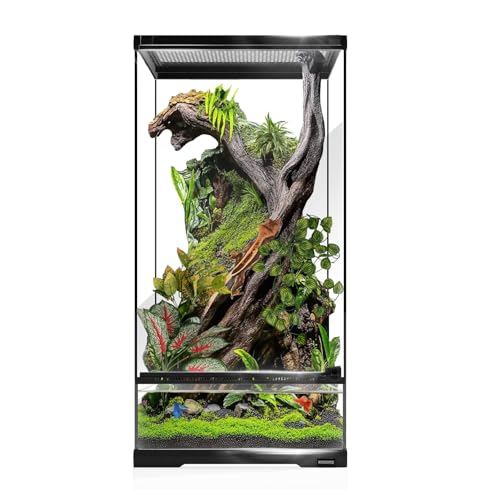
The waazoorep vertical 15 gallon tank combines a tall footprint with a front-opening door design for one-handed feeding and maintenance. A movable metal mesh top supports airflow and UVB exposure, with a dedicated space on top for wiring and lighting. Best for arboreal geckos or chameleons that benefit from vertical space and strong ventilation. One limitation is that front-opening doors may require regular lock checks to ensure secure containment.
Reptile Glass Tank, 16″ x 11″ x 9″ (10 gal)

Although this tank is listed at about 10 gallons, it shares similar build quality with the 15 gallon options, including tempered glass and a metal screen for ventilation. It provides a 360° view for easy health checks and is suitable for small leopard geckos or similar species. If you specifically need a 15 gallon enclosure, this is best considered as a transitional option when space or height constraints matter.
RunDuck 33 Gallon Panoramic Reptile Terrarium Kit

While larger than 15 gallons, the RunDuck kit is included here for users who may expand from a 15 gallon setup or want a panoramic, five-sided ventilation system for enhanced airflow. It enables seamless observation of geckos and small reptiles with a sturdy build and easy feeding access. Opt for this option if you anticipate upgrading to a bigger enclosure or need a robust panoramic view for active arboreal species. Avoid if you strictly need a 15 gallon size.
Buying Guide
Key considerations when choosing a 15 gallon gecko tank:
- Dimensions and layout: Do you prefer a longer, low-profile tank or a tall, vertical enclosure for arboreal geckos? Consider your species’ climbing needs and space allocation.
- Ventilation design: Top screen vents versus movable metal mesh tops affect airflow, heat penetration, UV exposure, and ease of maintenance. Choose based on heat sources and species behavior.
- Ease of feeding access: Front-opening doors or top-fed designs influence daily routine. Ensure the design matches your feeding style and handling comfort.
- Substrate management: Tanks with PVC trays or drainage systems help manage moisture and waste. This reduces cleaning time and substrate issues.
- Security and construction: Tempered glass, escape-proof latches, and sturdy frames keep pets safe and minimize escape risks.
- Visibility: Full-view glass enables clear observation, important for health checks and enrichment planning.
- Future needs: If you anticipate upgrading to larger terrariums, consider modular or tall designs that can adapt to species growth.
Frequently Asked Questions
- What is the advantage of a 15 gallon gecko tank over smaller tanks?
A 15 gallon tank provides more space for enrichment, feeding zones, and substrate depth while remaining manageable for a table setup, ideal for small geckos and early-stage habitats. - Are top-vented tanks better for geckos?
Top-vented designs improve airflow and heat distribution, which helps with UV exposure and enclosure cleanliness. They also reduce the chance of substrate moisture buildup. - Is a vertical 15 gallon tank suitable for arboreal geckos?
Yes, vertical tanks support climbing behavior and provide height for arboreal species, but ensure doors and locks are secure to prevent escapes. - Should I choose a long or tall 15 gallon tank for leopard geckos?
Leopard geckos typically thrive in longer, low-profile tanks with ground space for hiding and basking. Tall tanks are better for arboreal species. - Do 15 gallon tanks require special substrate setup?
Substrates should be chosen based on species and humidity; a PVC tray or drainage feature helps keep substrates in good condition and reduces moisture buildup. - Can I mix species in a 15 gallon tank?
Most gecko species are best kept solo or in carefully monitored pairs; mixing species can lead to stress and competition. Always prioritize species compatibility and welfare.