Choosing the best food bowls for cats involves considering their health, comfort, and eating habits. Elevated bowls reduce neck strain and help with digestion, while whisker-friendly designs prevent discomfort. Below is a summary of five top-rated cat food bowls that combine functionality and style. These picks feature stainless steel and ceramic bowls with tilting angles to reduce vomiting and anti-slip bases for mess-free mealtimes.
| Product | Material | Design Feature | Capacity / Size |
|---|---|---|---|
| Summark Upgraded Elevated Cat Bowls | Stainless Steel | 15° Tilt, Silicone Mat, Anti-Vomiting | 2 Bowls, Shallow 1.2 inch |
| PETKIT Raised Food Bowl | 304 Stainless Steel | Raised, 0/15° Tilt, Non-Slip Base | Approx. 5.5″ wide × 2.6″ deep |
| LoeJan Elevated Ceramic Bowl | Ceramic | 5 Oz Capacity, 15° Tilt, Anti-Vomiting | 5″ Width |
| AKAOLA Elevated Cat Bowls Set | Stainless Steel | 10° Tilt, 3 Bowl Set, Anti-Spill | 18 oz Each |
| LuckyPots Detachable Elevated Bowls | MF Resin & Stainless Steel | 15° Tilt, Adjustable Height, Whisker Friendly | Bowl Diameter 6.6″ |
Summark Upgraded Elevated Cat Bowls with Food Mat
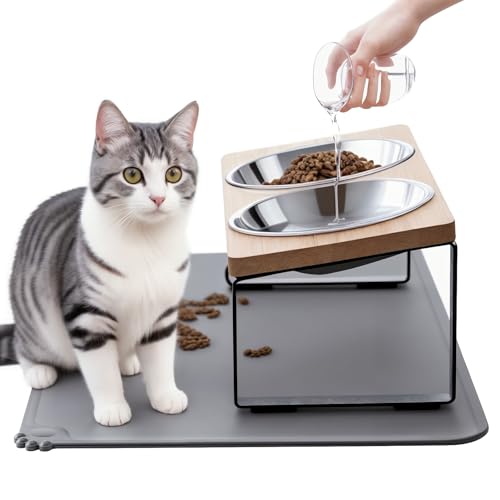
This set features two 1.2-inch shallow stainless steel bowls mounted at a 15° tilt on an elevated stand to ease neck and stomach pressure. The design helps reduce vomiting and supports digestion for cats and small puppies. A silicone food mat included in the set prevents spills and keeps feeding areas clean. The mat measures 18.9 by 11.8 inches, providing ample surface coverage. This bowl system is especially designed to minimize whisker fatigue and create a stress-free dining experience for pets.
PETKIT Raised Dog Cat Food Bowl 304 Stainless Steel

Made with durable 304 stainless steel, this raised bowl is recommended by veterinarians for its hygienic, rust-free properties. The 0°/15° tilted design supports easier swallowing and reduces strain on a cat’s body, helping prevent vomiting. Measuring about 5.5 inches wide and 2.6 inches deep, it is ideal for cats and small dogs. The bowl features a non-slip base with rubber grips to prevent tipping and spills, making it perfect for messy eaters while protecting floors.
LoeJan Elevated Cat Food Bowl for Anti-Vomiting

This ceramic elevated bowl stands out with its 5-inch width and tilted design to reduce vomiting and keep food centered. It supports neck comfort, making it particularly suitable for older cats or those with mobility challenges. The bowl’s tilt also helps flat-faced cats eat more easily by preventing food from spilling over. Its compact single-bowl form fits well in tight spaces while promoting a natural, comfortable eating posture.
AKAOLA Elevated Cat Bowls with Three Stainless Steel Bowls

This versatile set includes three 18-ounce stainless steel bowls on an elevated stand tilted at 10°. The slight tilt angle is optimized to prevent spills and ease digestion, which is beneficial for cats prone to nausea. The multiple bowl setup offers options for different types of food or water, suitable for small cats and puppies. All bowls are dishwasher safe, making maintenance simple and hygienic.
LuckyPots Detachable Elevated Cat Bowls with Adjustable Height

Constructed from lightweight MF resin, this elevated bowl combines portability with ergonomic benefits. With a 15° tilt and a diameter of 6.6 inches, it reduces whisker fatigue and prevents food spillage. The height design protects the cat’s spine, reducing joint stress and lessening vomiting. It is detachable for easy cleaning and adjustment, perfect for adult cats or kittens and promoting a healthy feeding posture.
Buying Guide for Cat Food Bowls
Choosing the right food bowl for your cat involves multiple considerations to ensure comfort, health, and ease of use.
1. Bowl Elevation and Tilt Angle
Elevated bowls support better feeding posture, reducing neck and spine strain. A tilt between 10° to 15° encourages easier swallowing and digestion, helping to minimize vomiting. However, the ideal tilt may vary by cat preferences and health conditions.
2. Material Safety and Durability
Stainless steel bowls are rust-resistant, hygienic, and easy to clean, recommended for their durability. Ceramic bowls provide aesthetic appeal and are suitable for cats with sensitivities but may chip or break. Plastic bowls are less recommended due to potential allergens and scratches harboring bacteria.
3. Whisker Fatigue Prevention
Cats have sensitive whiskers; deep or narrow bowls can cause discomfort known as whisker fatigue. Shallow, wide bowls, or specifically designed whisker-friendly shapes, help minimize this problem, encouraging relaxed eating.
4. Size and Capacity
Consider your cat’s size and eating habits. Larger bowls accommodate bigger meals or multiple cats, while smaller bowls suit kittens or small breeds. Capacity should balance with how much and how often your cat eats.
5. Slip Resistance and Stability
Non-slip bases or mats prevent bowls from sliding during mealtime, reducing spills and mess. This is especially important for active or playful cats.
6. Ease of Cleaning
Bowl materials that are dishwasher safe and have simple designs help maintain cleanliness and prevent bacterial buildup.
7. Additional Features
Some bowls come with matching mats or multiple compartments for food and water, adding convenience. Detachable stands or adjustable heights also increase versatility and longevity of use.