In this guide
Cats that vomit or have stomach sensitivities benefit from carefully chosen foods that are easy to digest and nourishing. This guide highlights five widely available options designed to support digestive health, reduce vomiting episodes, and maintain overall wellness. Each product is evaluated for digestibility, protein sources, and palatability to help cat owners compare easily and choose confidently.
| Product | |||
|---|---|---|---|
| Blue Buffalo Tastefuls Natural Dry Food for Adult Cats, Sensitive Stomach | Dry | Real chicken first; prebiotic support for digestion | Blue Buffalo |
| I And Love And You Feed Meow Tummy Wet Cat Food | Wet | Grain-free with prebiotics and protein-rich tuna | I And Love And You |
| Blue Buffalo Tastefuls Indoor Dry Cat Food | Dry | Natural ingredients with LifeSource Bits for immunity | Blue Buffalo |
| Purina Pro Plan With Probiotics, Sensitive Skin & Stomach | Dry | Probiotics and easy-to-digest grains for sensitive systems | Purina Pro Plan |
| Purina ONE Sensitive Stomach | Dry | Prebiotic fiber and easily digestible formula | Purina ONE |
Note: The selections focus on foods that are gentle on the stomach, provide good protein sources, and support digestion and immunity. Always introduce new foods gradually and consult a veterinarian if vomiting persists or worsens.
Blue Buffalo Tastefuls Natural Dry Food for Adult Cats, Sensitive Stomach
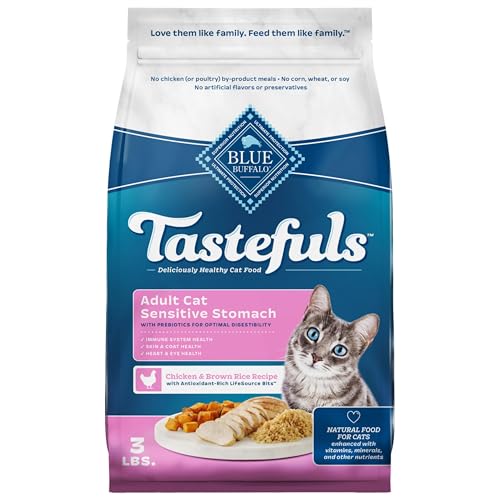
This dry formula starts with real chicken and is designed for cats with sensitive stomachs. It includes prebiotic fiber to support digestive health and LifeSource Bits to bolster immune support. The recipe emphasizes easily digestible ingredients suitable for adult cats that may vomit or experience digestive discomfort.
I And Love And You Feed Meow Tummy Wet Cat Food

This grain-free wet cat food features shredded tuna and pumpkin to aid digestion. It provides high-quality protein from tuna and includes prebiotics to support a healthy gut flora. The texture is designed to be palatable for cats while promoting easier digestion and reducing stomach upset.
Blue Buffalo Tastefuls Indoor Dry Cat Food

Designed for indoor cats, this dry formula emphasizes natural ingredients with chicken as a primary protein source. It incorporates fiber and nutrients to support digestive health and coat condition. LifeSource Bits contribute to immune system support, making it a balanced choice for adult cats with sensitive stomachs.
Purina Pro Plan With Probiotics, Sensitive Skin & Stomach

This dry cat food combines high protein from turkey and easily digestible grains. Fortified with guaranteed live probiotics, it supports digestive and immune health while aiming to minimize stomach upset and skin sensitivities. The formula is designed for adult cats needing gentle, protein-rich nutrition.
Purina ONE Sensitive Stomach

Purina ONE Sensitive Stomach focuses on a formula that’s gentle on digestion, using real turkey as a primary ingredient and prebiotic fiber to aid gut health. It is designed to support a healthy digestion and immune response in adult cats, especially those prone to stomach upset.
Buying Guide: Key Considerations For Cats Prone To Vomiting
Digestibility and Protein Sources
Choose foods with high-quality animal protein as the first ingredient. Look for easily digestible grains or grain-free alternatives if your cat shows grain sensitivity. Wet food can aid hydration and digestion, while dry foods can be convenient and cost-effective.
Fiber and Probiotics
Prebiotic fiber supports gut bacteria and bowel movements, potentially reducing vomiting linked to digestive upset. Probiotics can further support immune and digestive health, especially in cats transitioning diets.
Palatability and Texture
Cats can be picky. A combination of textures (wet plus dry) or a gradual transition between formulas can help acceptance and reduce stress during changes, which can influence vomiting episodes.
Medical Considerations
Chronic vomiting or persistent symptoms require veterinary evaluation. Some cats may have underlying conditions (allergies, pancreatitis, hairballs) that require targeted diets or medical management rather than general pet foods.
Transition Strategy
When introducing a new diet, mix the new food with the current one, increasing the new portion gradually over 7–14 days. This helps the digestive system adjust and can lessen vomiting associated with abrupt changes.