Found a dog food that minimizes carbs while maximizing protein? This guide highlights top options that fit a high-protein, low-carb profile, ideal for active dogs, lean pets, and dogs needing grain-free formulations. Each product is selected for clear protein content and low carbohydrate levels, with explanations on who benefits most and potential limitations.
Buyer summary table:
| Product | Highlights | Best For |
|---|---|---|
| 46% protein, <6% carbs, grain-free | Active adults seeking lean muscle and low carbs | |
| 46% protein, <6% carbs, grain-free | Dogs with fish preference or fat-for-energy diets | |
| 46% protein, <5% carbohydrates, grain-free | Long-term storage and cost-conscious households | |
| Single protein, air-dried/steam-dry process, digestive support | Dogs needing grain-free, nutrient-dense options | |
| 42% protein, low carb, grain-free | Active sporting dogs needing sustained energy |
Ketona Chicken Recipe Adult Dry Dog Food – 4.2 lb

High protein, low carb composition with grain-free formulation. Ketona states the product has 85% less carbohydrate than many grain-free brands and more than 46% protein. All chicken is non-GMO and antibiotic-free, raised by American ranchers with sustainable practices. This makes it a strong option for adult dogs needing lean muscle support and reduced glucose load.
- Best for: Active adult dogs that respond well to high-protein, low-carb diets and grain-free ingredients.
- Why chosen: Clear protein advantage and very low digestible carbohydrates help with weight management and energy.
- Caution: Some dogs may need gradual transition to grain-free kibble to avoid digestive upset.
Ketona Salmon Recipe Adult Dry Dog Food – 4.2 lb

This salmon-based Ketona option mirrors the same high-protein, low-carb profile with more than 46% protein and under 6% carbohydrate. The natural diet approach emphasizes animal-based fats and proteins, with non-GMO, antibiotic-free salmon sourced from American ranchers employing sustainable practices.
- Best for: Dogs that prefer seafood flavor or need a fat-rich, protein-forward diet.
- Why chosen: Reduces carbohydrate load while delivering high-quality animal protein.
- Caution: As with other Ketona lines, transition slowly to avoid gastrointestinal upset.
Ketona Chicken Recipe Large Bag – 24.2 lb
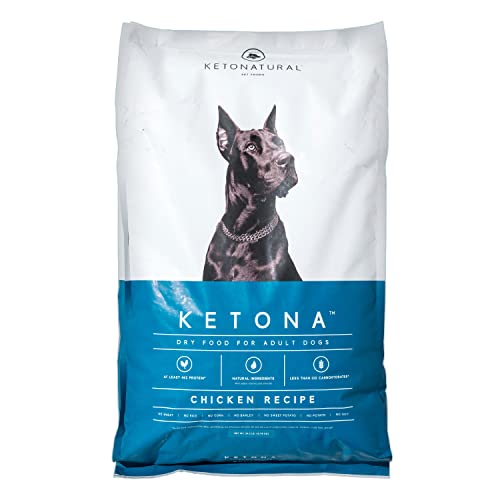
Large-bag option of the same Ketona chicken formula offers convenience and cost efficiency for households feeding frequently. Carbohydrates remain low, with protein above 46% and digestible carbs under 6% or under 5% depending on batch. Non-GMO, antibiotic-free chicken, raised in the U.S.
- Best for: Multi-dog households or owners seeking savings on a high-protein, low-carb option.
- Why chosen: Consistent protein level with very low carb content across a bigger bag.
- Caution: Bag size requires proper storage to maintain freshness after opening.
ZIWI Peak Steam & Dried Dog Food – Grass-fed Beef with Pumpkin

Single-protein, nutrient-dense option using steam-and-dry processing to preserve nutrients. Contains free-range beef, organs, bone, and added pumpkin fiber for digestion support. Grain-free with natural prebiotics to help gut health and overall wellness across life stages.
- Best for: Dogs needing a grain-free, nutrient-dense profile with digestive support.
- Why chosen: Combines high-quality protein with digestion-friendly ingredients and shelf-stable format.
- Caution: Some dogs may need a gradual introduction to a novel protein formula if transitioning from favorites.
VICTOR Super Premium Grain-Free Ultra Pro

Ultra Pro is a grain-free, high-protein formula designed for active dogs with high energy demands. It emphasizes 42% protein with low carbohydrate content and is suitable for dogs across life stages, including athletes and pregnant or nursing dogs.
- Best for: Sporting or highly active dogs needing sustained energy without grains.
- Why chosen: High protein in a grain-free base supports endurance and muscle maintenance.
- Caution: Grain-free formats are not suitable for all dogs; monitor for digestive tolerance and adjust feeding accordingly.
Buying Guide: High-Protein, Low-Carb Dog Food Essentials
What to look for when choosing a high-protein, low-carb dog food:
- Protein source: Prefer real meat (chicken, beef, fish) as the first ingredient. Check for non-GMO and responsibly sourced options when possible.
- Carbohydrate content: Look for total digestible carbohydrate percentage, and aim for under 6% if the brand discloses it. Grain-free formats often have lower carb counts, but verify with the label.
- Digestive health: Grain-free does not automatically equal better digestion. Consider foods with fiber sources like pumpkin, beets, or chicory root to support gut health.
- Life stage and activity: Active or athletic dogs typically benefit from higher protein and controlled carbs. Puppies, seniors, or special needs may require adjustments.
- Allergies and sensitivities: If your dog has food sensitivities, choose single-protein formulas and monitor reactions during transitions.
- Portion control and transition: Introduce new food gradually over 7–10 days to reduce GI upset. Use feeding guidelines from the brand and adjust for weight goals.
- Storage and shelf life: Consider bag size, bag integrity, and storage conditions to keep kibble fresh and palatable for your dog.
Frequently Asked Questions
- What does “high protein, low carb” mean for dogs?
– It refers to diets with a high percentage of protein and a limited carbohydrate content, aiming to support lean muscle and stable energy levels. - Are grain-free formulas always better for dogs?
– Not always. Some dogs tolerate grains well, and grain-free options may have different carbohydrate profiles. Check the label for total carbs and ingredients. - How should I transition my dog to a high-protein, low-carb diet?
– Start with a gradual 7–10 day transition, mixing old and new foods incrementally to minimize GI upset. - Can high-protein diets help with weight management?
– For some dogs, higher protein with lower carbs can support fat loss and lean muscle; individual response varies. - Is gluten-free or grain-free always necessary?
– Not necessary for every dog; consult a veterinarian if you suspect grain sensitivity or if the dog has specific health conditions. - What should I monitor after switching foods?
– Watch for changes in stool, energy, coat shine, and any signs of allergies (itching, GI upset).