When choosing LED lighting for a planted tank, aim for lights that deliver full-spectrum output, adjustable timers, and reliable heat management. The right light helps aquatic plants photosynthesize efficiently while enhancing fish and aquascape colors. This guide highlights five top options well-suited for typical home aquariums, from small desktop setups to mid-size planted tanks. Each product below is chosen for reliability, plant-friendly spectrum, and user-friendly controls.
Summary table of selected products
| Product | Best for | Tank Size Range | Notes |
|---|---|---|---|
| Hygger Clip On 24/7 Lighting Aquarium LED Light | Beginners and small tanks | 12–20 in | Separable adapter; adjustable time and brightness |
| SEAOURA Led Aquarium Light for Plants | All-around plant growth | 12–18 in | DIY mode; high CRI |
| AQUANEAT LED Full Spectrum Light | Mid-size aquariums | 18–24 in | Multiple LEDs for broad spectrum |
| NICREW ClassicLED Plus LED Aquarium Light | Precise timing and color control | 24–30 in | Two lighting modes; strong color rendering |
| Hygger Advanced LED Aquarium Light with Timer | 30–36 in planted tanks | 30–36 in | Full spectrum plus 24/7 and DIY modes |
Hygger Clip On 24/7 Lighting Aquarium LED Light
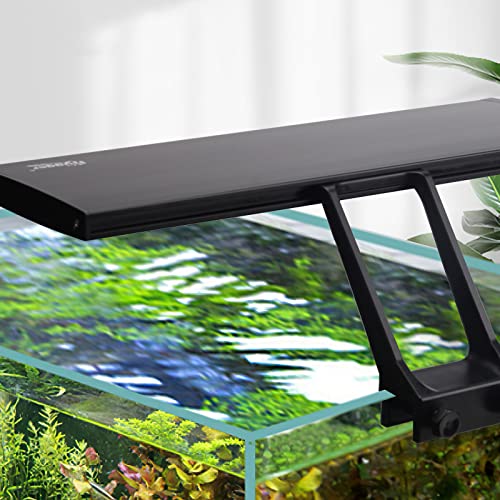
The Hygger Clip On 24/7 Light offers a built-in sunrise, daylight, and moonlight cycle, with a DIY mode for customized color and brightness. It suits small to mid-sized planted tanks and is noted for a clip-style bracket that fits tank walls under 0.9 inches thick. Best for beginners or hobbyists who want automatic, daylight-simulating cycles and easy installation.
- Best for: Small to medium planted tanks and users who want a simple, automatic daily cycle.
- Why selected: The 24/7 default cycle mirrors natural lighting, while DIY mode enables more customization without extra hardware.
- Caution: The light’s cycle timing is adjustable, but the default ramp can be perceived as slow by some users seeking aggressive growth lighting.
SEAOURA Led Aquarium Light for Plants

This SEAOURA unit emphasizes full-spectrum output and adjustable brightness with a clear DIY control path. It’s designed for 12–18 inch tanks and is accessible to beginners while offering depth for plant enthusiasts who want predictable growth cycles. The white, red, green, blue, and pink LEDs support various plant requirements and color rendering.
- Best for: Beginners and hobbyists who want straightforward DIY control and strong plant growth support.
- Why selected: Full-spectrum output with a simple timer and multiple color modes helps accommodate a variety of plant species.
- Caution: Controller is basic; advanced users may want more granular ramp and memory options.
AQUANEAT LED Full Spectrum Light
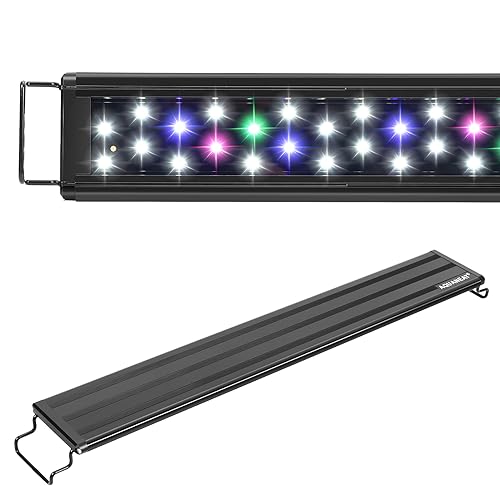
The AQUANEAT fixture supports 18–24 inch tanks with a 42-LED configuration (white, blue, pink, green), offering broad spectrum coverage for mid-sized planted tanks. It’s designed for flexible tank configurations and is a practical choice for aquariums that require even light distribution across longer lengths.
- Best for: Mid-sized tanks needing balanced full-spectrum lighting across the length of the aquarium.
- Why selected: The multi-LED mix covers essential wavelengths for both leafy and color-intensive plants.
- Caution: Some users report mounting considerations for taller glass rims; ensure bracket fitment matches your tank’s rim style.
NICREW ClassicLED Plus LED Aquarium Light

The NICREW ClassicLED Plus combines a bright spectrum with programmable on/off timing and customizable brightness. It’s suited for 24–30 inch tanks and provides a practical mix of 6500K white, blue, red, and green wavelengths with 15 or 30-minute ramp-down options to simulate sunrise and sunset. This makes it a solid pick for more serious planted setups seeking consistent day-night cycles.
- Best for: Medium-long tanks where reliable timer-based lighting and color control are required.
- Why selected: Strong color rendition (CRI 91) helps reveal plant and fish colors while keeping plant growth steady.
- Caution: Spectrum adjustment is tied to timer use; manual on can override with less precision.
Hygger Advanced LED Aquarium Light with Timer
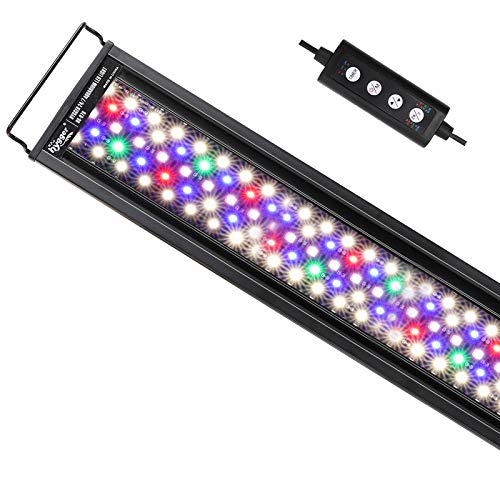
This Hygger model combines premium 5050 and RGB LEDs with a 24/7 mode and a DIY mode offering seven colors and five brightness levels. It is intended for 30–36 inch planted tanks and highlights heat-dissipation through thick aluminum. It also features a memory function so settings persist after power cycles. Choose this for larger tanks needing robust spectrum and customization.
- Best for: Larger planted tanks where a more powerful, customizable light is needed.
- Why selected: Full-spectrum output with color customization helps tailor growth for diverse plant species.
- Caution: Higher power output may require careful heat management and potential dimming for very shallow tanks.
Hygger 26W 24/7 Lighting Aquarium LED Light

The 26W Hygger unit offers a 24/7 cycle with a sunrise-to-moonlight progression and a DIY mode for time, color, brightness. Extendable brackets enable versatile mounting for various freshwater tanks, and a memory function keeps settings after interruptions. It is ideal for mid-to-large planted tanks where consistent daily light and color variety are desired.
- Best for: Tanks that need robust all-day lighting with easy customization.
- Why selected: Similar 24/7 cycle with more wattage for deeper or denser plant growth.
- Caution: Higher brightness at full power may require more attention to algae growth in nutrient-rich setups.
Buying Guide
Key considerations when shopping for LED lights for planted tanks:
- Tank size and mounting: Measure length and determine if a clip-on, rim-mounted, or adjustable-bracket fixture is best. Bigger tanks often require longer fixtures or multiple units for even coverage.
- Light spectrum: Look for full-spectrum options that cover 6500K white plus blue and red wavelengths. RGB options help with plant color and growth tuning.
- Growth vs. color: If rapid plant growth is a priority, favor higher PAR output and consistent spectrum. For showcase tanks, color accuracy (CRI) and color modes can enhance aesthetics.
- Timers and memory: A programmable timer that simulates sunrise and sunset reduces algae risk and supports plant cycles. Memory features prevent re-calibration after power outages.
- Heat management: Aluminum housings and good heat dissipation extend fixture life and maintain stable light output.
- Installation ease: Consider whether you prefer clip-on, extendable brackets, or fixed mounts. Separable adapters can reduce waste if components fail.
Frequently Asked Questions
- Q: Do plants need blue light, red light, and white light? A: Plant growth benefits from a mix of wavelengths; blue supports vegetative growth, red supports flowering and overall photosynthesis, and white provides a balanced spectrum similar to natural daylight.
- Q: How long should my planted tank lights be on each day? A: Most hobbyists start with 8–10 hours of light per day and adjust based on plant response and algae presence.
- Q: Is a 24/7 lighting cycle good for plants? A: A 24/7 cycle can be used, but many setups use a day-night cycle with a gentle ramp to reduce stress on fish and algae growth.
- Q: Can I use these lights for saltwater tanks? A: Some LEDs are suitable for freshwater and planted tanks; always check the fixture’s specifications for salinity tolerance and tank compatibility.
- Q: Do these lights require special timers? A: Most listed models include built-in timers or memory functions; external timers are optional for additional scheduling flexibility.
- Q: How do I know if my light is strong enough for plant growth? A: Look for a high PAR rating or manufacturer-provided growth guidance for your tank size; ensure coverage spans the full length of the tank.