If you’re looking for a reliable way to keep water clean in reptile tanks, this guide highlights five effective filters designed for turtles, amphibians, frogs, and other small aquatic pets. These options emphasize quiet operation, adjustable flow, and multi-stage filtration to maintain water quality. Best for beginner setups, mid-sized terrariums, and advanced hobbyists who want hands-off maintenance.
Summary Table of Chosen Products
| Product | Best For | Key Benefit | Water Volume Range |
|---|---|---|---|
| FRIRODSAY Aquarium Filter | Shallow-water tanks and turtles | Quiet operation, activated carbon filtration | Low water line ~2.5 cm |
| TARARIUM Turtle Tank Filter 290GPH | Small to mid-size turtle tanks | Three-stage filtration with ceramic bio-balls | 20–85 gallons |
| PULACO Internal Filter 3–20 Gallons | Compact turtle and reptile tanks | Waterfall design for aeration, low power | Up to 20 gallons |
| TARARIUM 222GPH Internal Filter | Small aquariums with reptiles and amphibians | Multi-stage filtration, adjustable flow | 10–40 gallons |
| hygger 150GPH Turtle Filter | Reptile habitats needing customizable flow | Three-stage media, adjustable multi-port output | 5–35 gallons |
FRIRODSAY Aquarium Filter for Turtles and Reptiles

Best for: shallow-water habitats and amphibians that require gentle water turnover. This in-tank filter installs with suction cups or hanging clips and uses a large filter plate with activated carbon to remove odors and impurities. It’s designed to run quietly, helping maintain a calm tank environment for turtles, newts, and small fish. It also features a strong suction pump to prevent debris buildup without drawing in small pets.
Why chosen: The combination of ease of installation, quiet operation, and chemical filtration makes it a solid all-around pick for shallow tanks. It suits setups where a low water line is necessary and where a compact, in-tank filter is preferred over external systems. Caution: ensure the water level remains within the recommended minimum (around 2.5 cm) to avoid air intake or reduced filtration efficiency.
TARARIUM Turtle Tank Filter 290GPH

Best for: turtle tanks up to 85 gallons seeking robust filtration. This model uses a three-stage filtration system with a dense mesh sponge to capture debris and a ceramic bio-ball layer to promote beneficial bacteria. The pump is adjustable for steady water flow, helping maintain oxygenation without stressing pets.
Why chosen: The layered approach—sponges for debris plus bio-balls for biological filtration—offers a balanced filtration strategy that supports both waste removal and bacterial filtration. It’s especially suitable for hobbyists who want reliable odor control and clearer water. Caution: monitor the filter’s flow setting when acclimating new turtles, as overly strong flow can disrupt smaller amphibians in the tank.
PULACO Internal Filter 3–20 Gallons

Best for: small to medium reptile tanks that need a quiet, energy-efficient solution. This internal filter uses a waterfall design to aerate water and has a large filter plate to block debris, supporting overall water clarity. It is compatible with freshwater and lightly salted environments.
Why chosen: The 5-watt, 132 GPH pump provides stable flow with low noise, making it suitable for crisp water in tanks up to 20 gallons. It’s particularly appealing for setups where power consumption matters. Limitation: designed for smaller volumes; may require more frequent maintenance in heavily stocked tanks.
TARARIUM 222GPH Internal Filter

Best for: compact reptile and amphibian tanks that require adjustable filtration. The filter’s three-stage approach—debris-catching mesh sponges and ceramic bio-balls—enhances water quality while the pump’s flow can be tuned to match the tank’s needs.
Why chosen: It offers good performance in 10–40 gallon setups with straightforward maintenance. Caution: ensure power cable and pump area are kept dry to avoid electrical issues in humid terrariums.
hygger 150GPH Turtle Filter
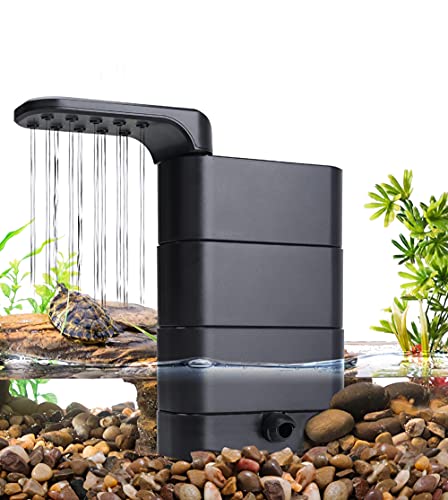
Best for: flexible reptile aquariums up to about 35 gallons that require a customizable filtration system. This three-stage filter uses two sponges plus bio media, with a multi-directional output that can be adjusted to create varying flow patterns and oxygenation levels.
Why chosen: Its adjustable multi-port flow is useful for tanks with diverse inhabitants or transitional water conditions. Caution: assembly requires careful alignment of media to avoid bypassing debris, and you may want to add extra media if bio-load increases.
hygger Turtle Tank Filter with Four-Layer Media

Best for: deeper turtle tanks or habitats where multiple filtration media layers are advantageous. This four-layer configuration includes a combination of media that supports mechanical, chemical, and biological filtration while offering a waterfall-style outlet for surface agitation.
Why chosen: The diverse media stack supports comprehensive water treatment and better odor control. Caution: ensure proper fit within the tank’s dimensions to prevent overflow during high-flow periods.
Buying Guide: Reptile Tank Water Filter Essentials
- Tank size and water depth: Choose filters rated for your tank volume and compatible with shallow water if needed. In-tank models are ideal for compact setups, while corner or external units suit larger tanks.
- Filtration stages: Multi-stage systems (mechanical, chemical, biological) provide clearer water and healthier bacteria balance. Ceramic bio-balls support beneficial bacteria growth.
- Flow rate and adjustability: Look for adjustable pumps to prevent overwhelming smaller reptiles. Moderate flow improves oxygenation without stressing animals.
- Noise and power consumption: Quiet operation and low-wattage pumps are beneficial for home setups and bedrooms.
- Installation and maintenance: Suction-cups, hanging clips, and easy access to media make routine cleaning simpler. Consider how often you’ll replace media and how easy it is to clean.
- Water level tolerances: Some filters operate at very low water levels; verify the minimum water line to avoid dry running or reduced filtration.
- Compatibility with species: Turtles, frogs, and newts have different swimming patterns. Choose a filter that can deliver sufficient turnover without creating dangerous currents.
- Replacement media availability: Ensure you can source replacement sponges, carbon, and bio-media; this affects long-term maintenance costs.
FAQ
- What is the main difference between internal and external reptile tank filters? Internal filters sit inside the tank and are compact and easy to install, while external filters connect outside the tank and can provide higher flow for larger setups.
- How often should I clean reptile tank filters? Clean or replace media according to manufacturer guidance, typically every 2–4 weeks for media that traps debris; check weekly for clogged sponge.
- Can I use a standard fish tank filter for a turtle tank? Some are suitable, but turtles produce more waste and require stronger, multi-stage filtration and flow control to handle higher bio-loads.
- Is adjustable flow necessary for all reptile tanks? Not always, but it helps tailor habitat conditions as your pets grow or change activity levels, reducing stress from strong currents.
- What media should I use in multi-stage filters? Start with mechanical sponges, then add ceramic bio-balls for bacteria, and activated carbon for odor and chemical filtration if appropriate for the inhabitants.
- Are these filters safe for amphibians and frogs? Yes, many are designed for amphibians, but ensure minimal disturbance to sensitive species by using moderate flow and avoiding direct water jets on their bodies.
These five filters provide a range of solutions from compact internal units to larger, multi-stage options. When selecting, consider your tank size, the species housed, and how much maintenance you’re willing to perform. The right filter promotes clear water, healthier inhabitants, and easier upkeep for your reptile habitat.